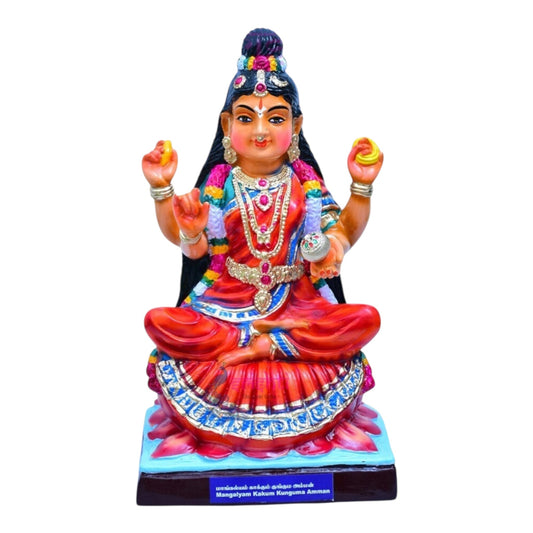
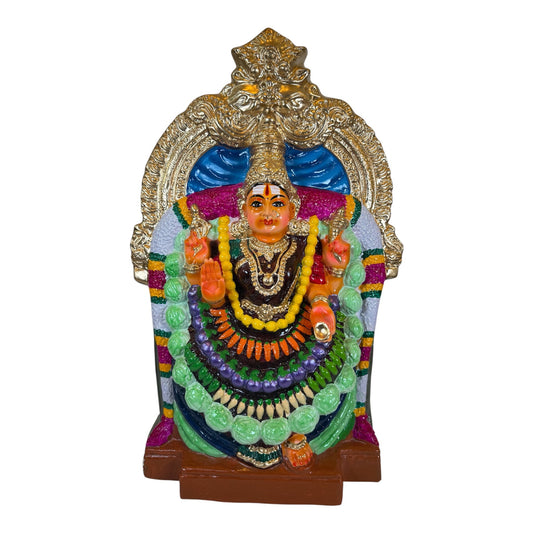
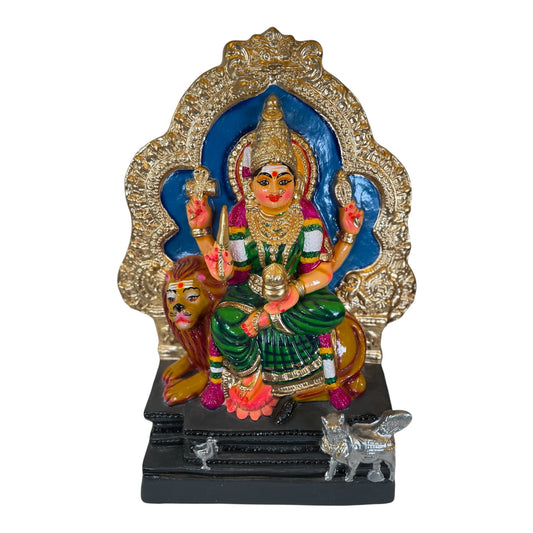
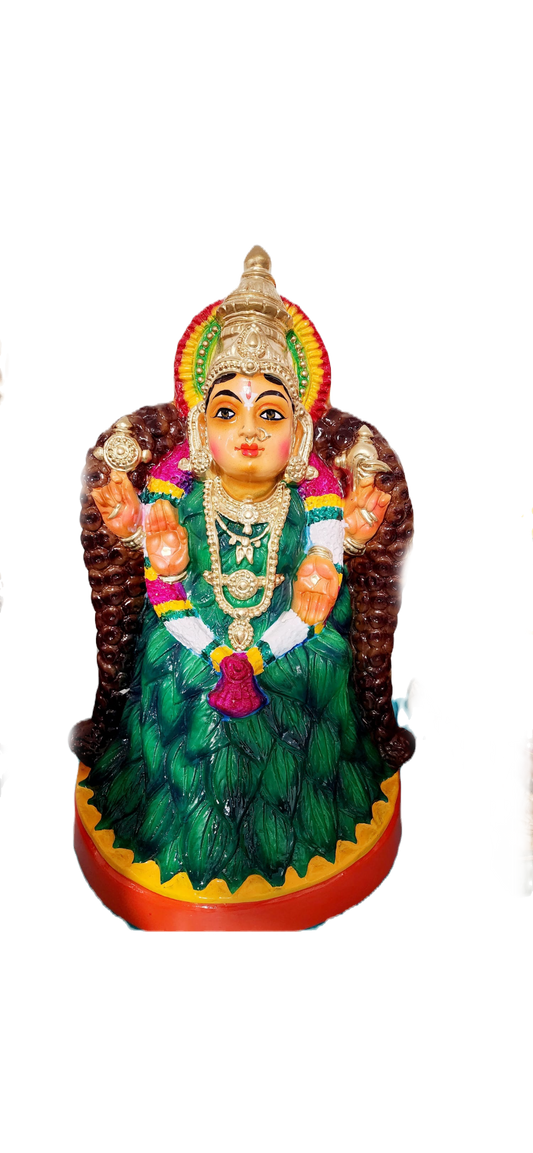
What Is an Amman Golu Doll Statue in Clay
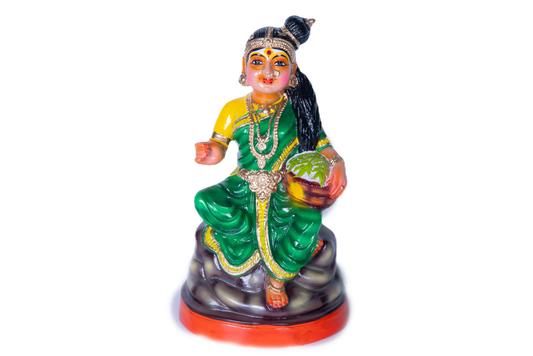
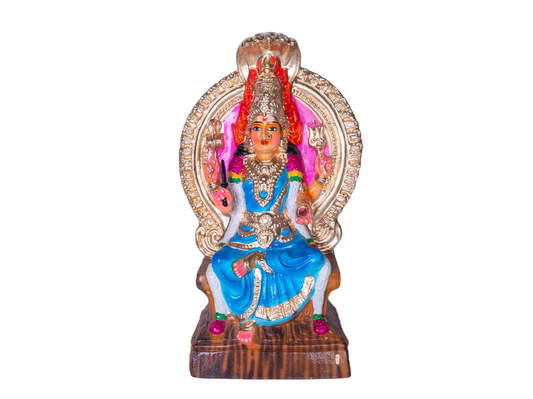
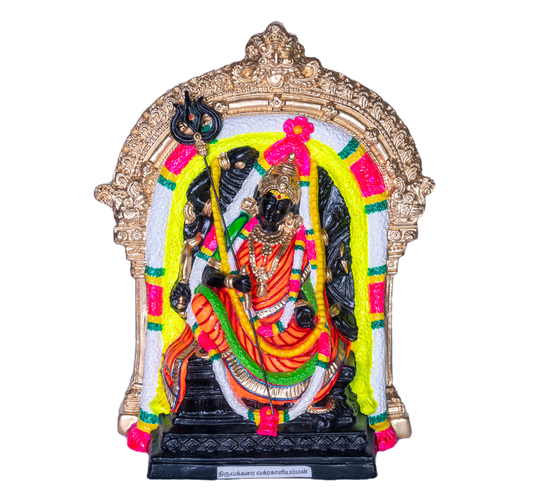
Amman means mother in Tamil. In Golu tradition, Amman refers to forms of the goddess Shakti, worshipped for strength and protection. Statues include Samayapuram Amman, Varahi, Vekkali Amman, Kunguma Amman, and several other regional forms tied to specific temples in Tamil Nadu.
Two materials show up most often in these statues.
Material
How It's Made
Look and Feel
Clay
Shaped by hand, dried, then painted
Textured, close to a temple idol finish
Paper mache
Built over a mold, layered, then painted
Lighter weight, easier to ship, detailed finish
An Amman golu doll statue in clay tends to weigh more and holds a rougher, earthier texture. Paper mache versions cost less to ship and hold fine detail well, which matters for smaller figures with detailed jewelry or hand gestures.
Why People Search for an Amman Doll Statue Online USA
Golu dolls made in India are hard to find in most US cities. Local Indian grocery stores stock a small range, and most don't carry Amman forms beyond one or two common ones. This gap sends buyers online.
A search for an Amman doll statue online USA usually comes from one of three situations:
- A family started a new Golu tradition after moving to the US and needs a starter set
- A household is adding a specific Amman form to an existing Golu display
- Someone is buying a statue as a gift for a housewarming, wedding, or festival
Each of these buyers wants the same three things: a statue that matches temple depictions, a material that ships without damage, and a seller that answers questions about origin and care.
How Swatika USA Sources These Statues
Swatika USA works with artisans in India who build Golu dolls using traditional methods. The company does not manufacture statues in bulk overseas. Order volume stays smaller, and pieces come in batches tied to the Navratri season, which runs from late September through October most years.
Here is what buyers can expect from the company, based on its published policies:
- Based in Texas, with a phone line and WhatsApp support during business hours
- Shipping across the USA, with free shipping on orders over 350 dollars
- Stock levels shown per product, including sold-out status, so buyers see availability before ordering
This kind of detail matters more than a general promise of authenticity. A buyer comparing sellers should look for a physical address, a return policy, and clear stock counts, not just product photos.
Types of Amman Statues to Know Before You Buy
Not every Amman statue represents the same goddess or story. A few common forms found in Golu collections:
- Samayapuram Amman: linked to a temple near Trichy, known for protection
- Varahi Amman: one of the Sapta Matrikas, often shown with a boar-faced form
- Vekkali Amman and Kunguma Amman: tied to auspiciousness and local temple worship in Tamil Nadu
- Chakkulathu Bhagavati Amman: a regional Kerala deity also placed in South Indian Golu sets
Buyers who already know their family's Ishta Devata, or family deity, often search by that specific name rather than the general term Amman.
Setting Up an Amman Doll in a Golu Display
Placement matters as much as the statue itself. A few points worth knowing:
- Amman statues usually sit on an upper step, since the display works from divine figures at the top down to everyday scenes at the bottom.
- Small lamps or fresh flowers placed near the statue are common, though this varies by family tradition.
- Clay statues need a stable, flat surface. A tilted step raises the chance of a fall during the nine-day display period.
- Statues get packed away after Navratri, so a padded box or the original packaging helps prevent chips from year to year.
None of this is fixed rule. Golu setup varies by region, by family, and by what got passed down from a grandmother or an aunt.
What to Check Before You Buy an Amman Doll Statue Online
A few practical checks before ordering:
- Confirm the material (clay or paper mache) since weight and shipping cost differ
- Check the size listed in inches, since photos alone can be misleading
- Read the return policy for cracked or damaged pieces on arrival
- Look for a real phone number or address, not just a contact form
- Check if the seller ships in time for Navratri, since order volume rises sharply in September
Swatika USA lists material, size, and stock status on each product page, and buyers can reach the team by phone or WhatsApp before placing an order.
FAQs
1. What does Amman mean in a Golu display?
Amman means mother and refers to forms of the goddess Shakti in Golu tradition. Families place an Amman statue on an upper step of their Golu to represent protection and strength during Navratri.
2. Is a clay Amman statue better than a paper mache one?
Neither is better on its own. Clay gives a heavier, temple-like texture, while paper mache is lighter, ships more easily, and holds fine detail on smaller figures.
3. How do I know which Amman form to buy?
Many families buy the form tied to their own family deity or hometown temple, such as Samayapuram Amman or Varahi Amman. If you do not have a specific form in mind, Samayapuram Amman is one of the most common starting statues.
4. Does Swatika USA ship Amman statues across the country?
Yes. Swatika USA ships across the USA and offers free shipping on orders over 350 dollars. The company is based in Texas and can be reached by phone or WhatsApp for order questions.
5. When should I order an Amman doll statue for Navratri?
Order at least three to four weeks before Navratri, which usually falls in late September or October. Demand rises close to the festival, and some statues sell out early each year.